Aggregated Orderbook Heatmap — How to Read Bias, Actors, and Pressure
The Aggregated Orderbook Heatmap is your *best* “state of the market” panel because it shows you where liquidity is actually sitting (and how it changes), not just where price has been.
This tutorial covers:
- How to infer market bias from the heatmap
- How to spot independent actors (real participants vs. noise)
- How to read pressure and likely “paths of least resistance”
- Common traps (spoofing, stale liquidity, overfitting the colors)
1) What the heatmap is actually showing
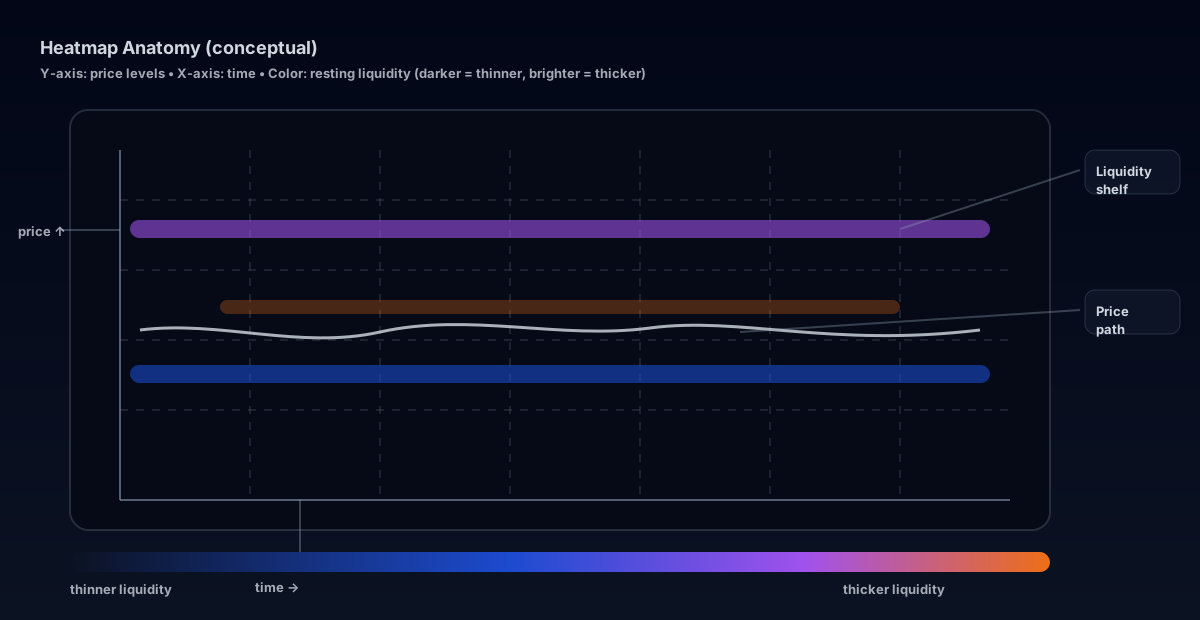
Think of the heatmap as a time series of the *orderbook’s liquidity distribution*.
- The y-axis is price levels.
- The x-axis is time.
- The color intensity represents how much resting size is sitting at/near that price level.
If you only remember one thing:
- Candles show where trades happened.
- The heatmap shows where *liquidity wants to trade* (or defend).
2) Market bias from the heatmap
Market “bias” here doesn’t mean prediction. It means:
- Where liquidity is stacking
- Where liquidity is being pulled
- Which side is *more willing* to absorb
2.1 Bias via “support shelf” vs “ceiling shelf”
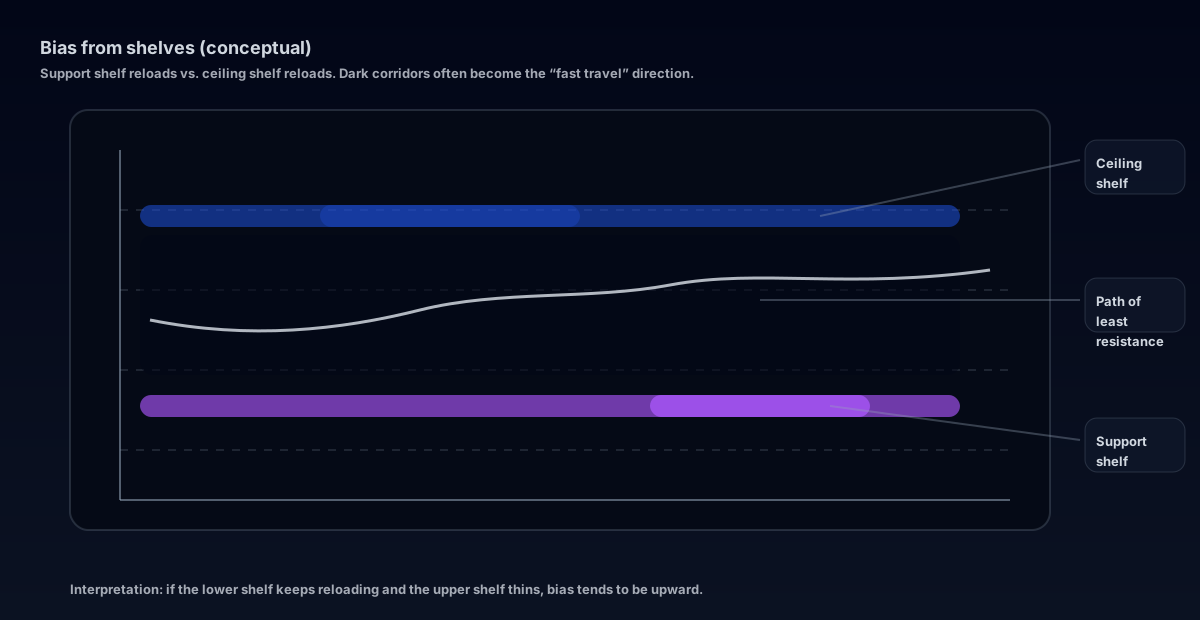
- A support shelf is a bright band *below* price that persists.
- A ceiling shelf is a bright band *above* price that persists.
Rules of thumb:
- If supports keep reloading while ceilings thin, bias is up.
- If ceilings keep reloading while supports thin, bias is down.
2.2 Bias via pull/stack behavior
Watch what happens *as price approaches* a level:
- Bullish tell: bids stack (brighten) as price comes down.
- Bearish tell: asks stack (brighten) as price comes up.
Watch what happens *after a touch*:
- Bullish tell: bids reappear after getting hit (absorption + reload).
- Bearish tell: asks reappear after getting lifted.
2.3 Bias via “path of least resistance”
Price tends to move fastest through areas where the heatmap is *dark* (thin liquidity).
- Bright zones = friction / potential slowdowns
- Dark zones = fast travel / “air pockets”
A practical way to use it:
- Identify the next thin liquidity corridor above and below.
- Ask: which side is being defended more aggressively?
3) Independent actors (real participants) in the heatmap
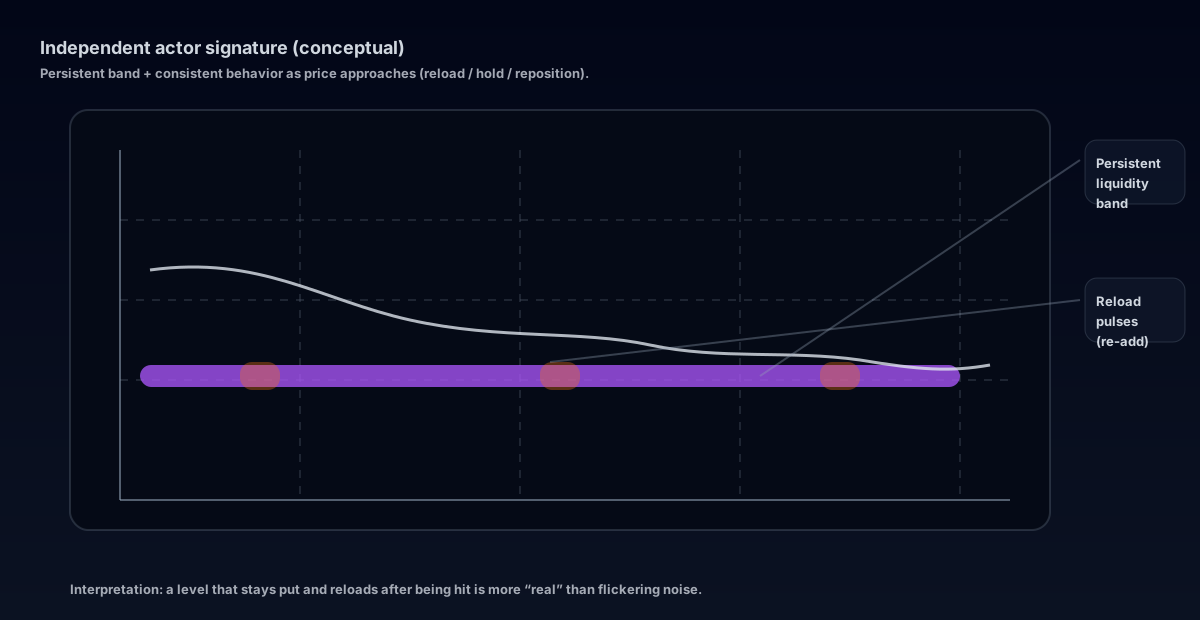
An independent actor is a participant (or coordinated group) that is *not merely reacting to the last candle*.
They show up as liquidity that is:
- Persistent
- Intentionally placed
- Behaves consistently when price approaches
3.1 Signatures of an independent actor
Look for bright bands that:
- Appear at a meaningful level (rounds, prior highs/lows, VWAP-adjacent zones)
- Hold position over time (doesn’t jitter every second)
- Maintain size through volatility
3.2 “Stepping” behavior (laddering)
A strong tell is a participant that repositions as price moves:
- Bids “step up” behind price in an uptrend.
- Asks “step down” above price in a downtrend.
This can create a *staircase* pattern of bright zones.
3.3 What *isn’t* an actor
Not every bright band is meaningful:
- Tiny bands that flicker on/off constantly are often noise.
- Levels that brighten only when price is far away and disappear when price approaches can be spoof-like.
4) Pressure on the books
Pressure is about *who has to act next*.
4.1 Compression (squeeze setup)
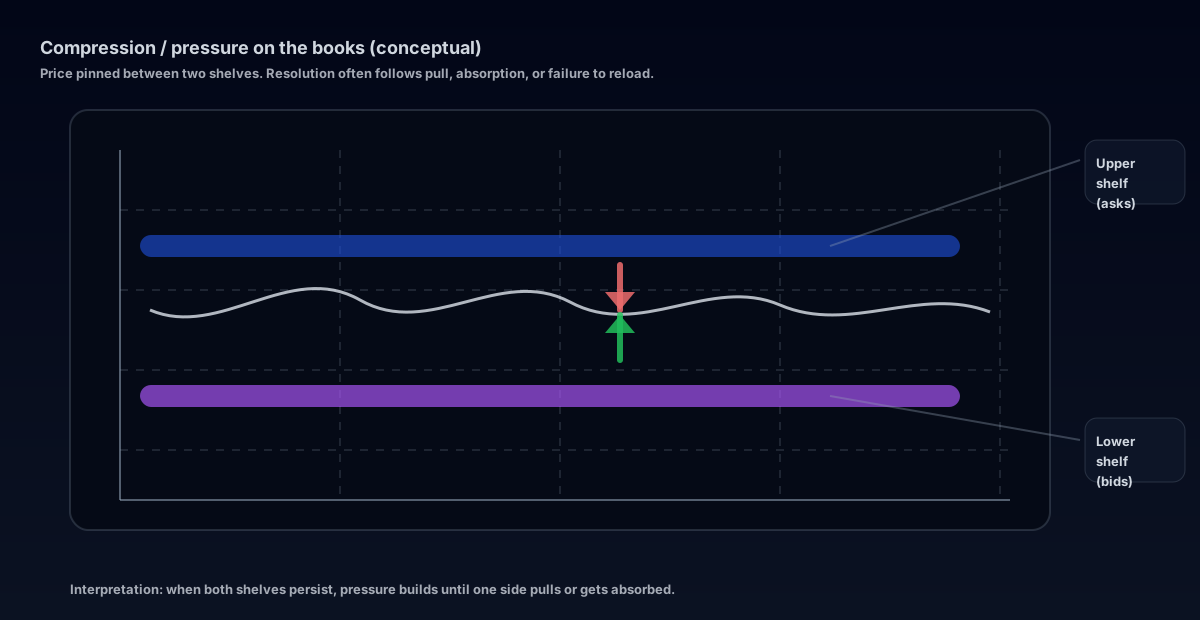
If you see price pinned between:
- Strong bids below (bright)
- Strong asks above (bright)
…you have compression.
Compression usually resolves when one side:
- Pulls liquidity
- Gets absorbed
- Stops reloading
4.2 Absorption: the “bright band that doesn’t move”
Absorption looks like:
- Price repeatedly trading into a level
- Heatmap staying bright (or re-brightening)
- Price failing to push through
Interpretation:
- If price can’t break down into strong bids → buyers absorbing sells.
- If price can’t break up into strong asks → sellers absorbing buys.
4.3 Liquidity vacuum (fast move)
A vacuum move is when:
- The next region in the direction of travel is dark
- The defending side pulls
- Price accelerates because there’s little to transact against
Use case:
- If you’re already in the move, vacuums help you *hold* instead of taking profits too early.
5) Practical workflows
Workflow A: “2-minute state read”
- Find the closest two bright shelves above and below.
- Identify the nearest dark corridor beyond each shelf.
- Watch pull/stack behavior as price approaches the nearest shelf.
- Only then form a directional bias.
Workflow B: “Actor confirmation”
- Mark a suspected actor band.
- Wait for price to approach it.
- Confirm the behavior:
- Does it reload?
- Does it hold position?
- Does price stall / fail / reverse?
If behavior is inconsistent, don’t force it.
6) Common traps
- Overweighting color intensity: bright doesn’t always mean “will hold”. It can mean “will get consumed”.
- Assuming every band is a wall: some liquidity is *advertising* and will vanish.
- Ignoring time: persistence matters more than a single snapshot.
7) Quick glossary
| Term | Meaning |
|---|---|
| Shelf | Persistent liquidity band (support/ceiling) |
| Reload | Liquidity returns after being hit |
| Pull | Liquidity disappears as price approaches |
| Absorption | Market orders are consumed without price progressing |
| Vacuum | Thin liquidity zone that enables fast travel |
| Compression | Price trapped between strong liquidity on both sides |