Aggregated DOM — How to Read the Ladder (Bias, Pressure, Sweeps)
The Aggregated DOM (Depth of Market) shows you the *live battle* at the best bids/asks and the levels immediately above and below. Compared to the heatmap (which is great for structure), the DOM is great for *timing*.
This tutorial covers:
- What the DOM is showing (and what it is not)
- How to read imbalance and pressure
- How to identify sweeps, absorption, and pulling
- How to spot “real” behavior vs. noise
1) DOM anatomy (what you’re looking at)
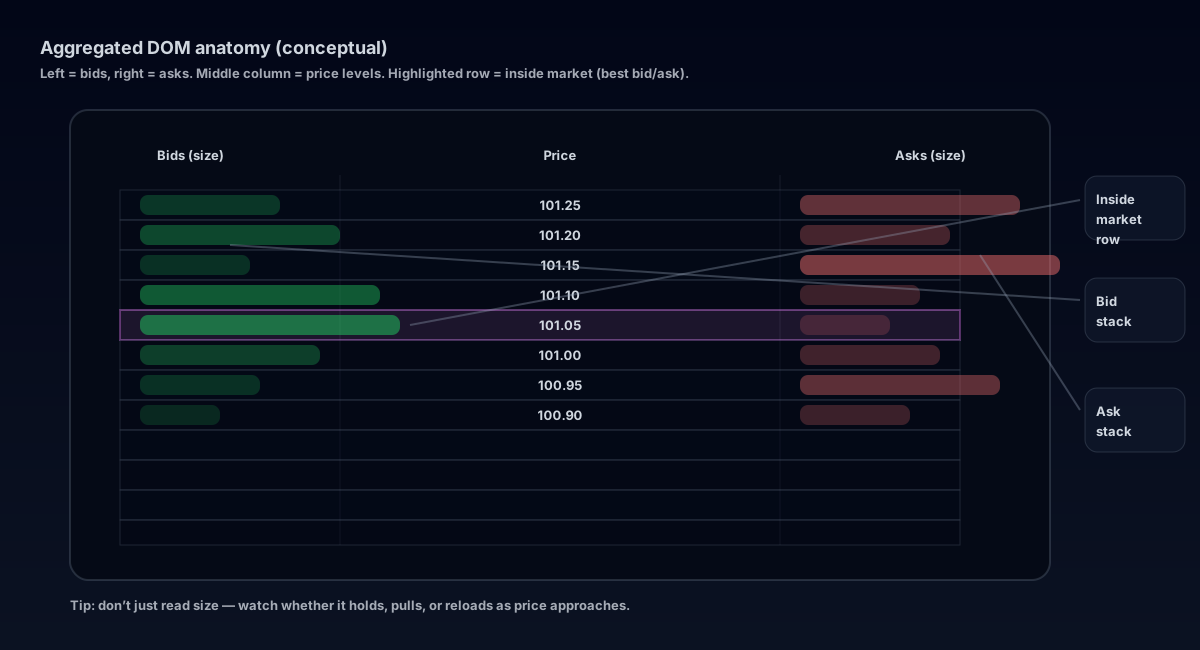
At each price level you’re seeing resting liquidity on the bid and ask.
- Bids: buy orders waiting below price
- Asks: sell orders waiting above price
- Inside market: best bid / best ask (where the next trade is likely to print)
Key principle:
- The DOM is *intent* (resting orders), not guaranteed execution.
2) Reading imbalance (bias) — without overreacting
2.1 Local imbalance near the inside
A simple way to start:
- Compare total bid size in the nearest N levels vs ask size in the nearest N levels.
If bids are heavier *and* do not pull as price approaches, bias is up. If asks are heavier *and* do not pull as price approaches, bias is down.
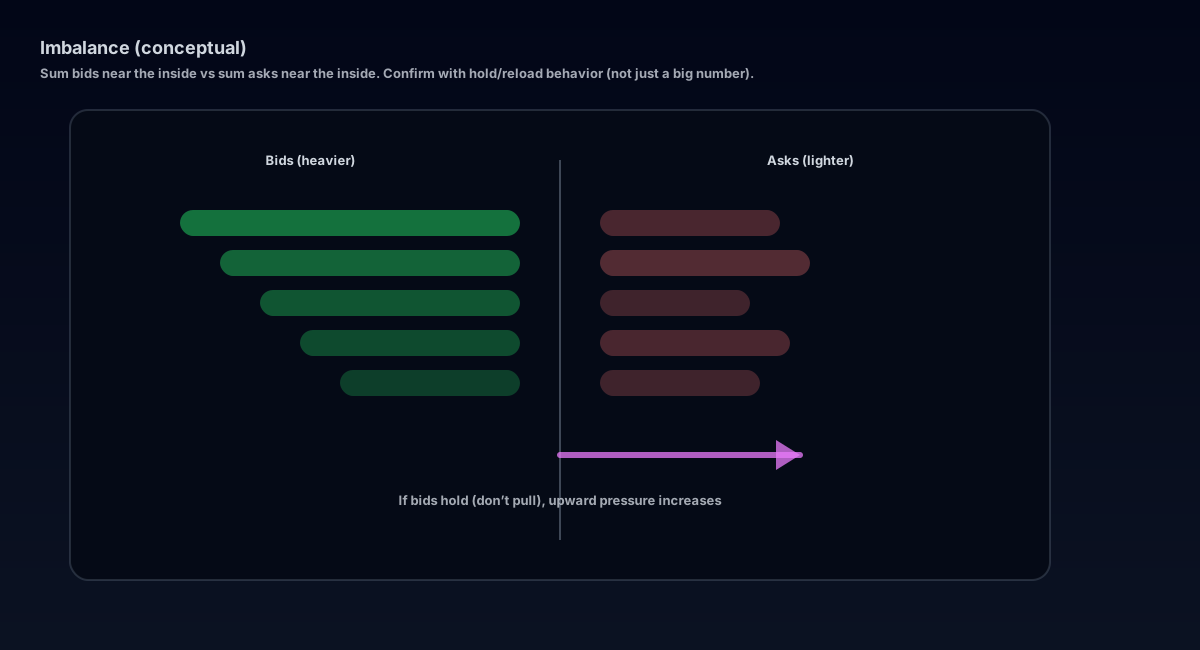
2.2 “Stack vs pull” is more important than “big number”
Big size that disappears right as price touches it is often not actionable.
What you want to see:
- A level that holds or reloads when pressured.
3) Pressure: who has to act next?
Pressure is about what happens when the market is repeatedly testing one side.
3.1 Upward pressure signals
- Best ask getting lifted repeatedly
- Ask sizes thinning (levels above get smaller)
- Bids behind price stacking or reappearing quickly
3.2 Downward pressure signals
- Best bid getting hit repeatedly
- Bid sizes thinning (levels below get smaller)
- Asks above price stacking or reappearing quickly
3.3 Compression (DOM version)
When both sides keep reloading near the inside, price can get pinned. Resolution often happens when:
- One side pulls
- One side fails to reload
- A sweep removes a chunk of levels
4) Sweeps (liquidity getting cleared)
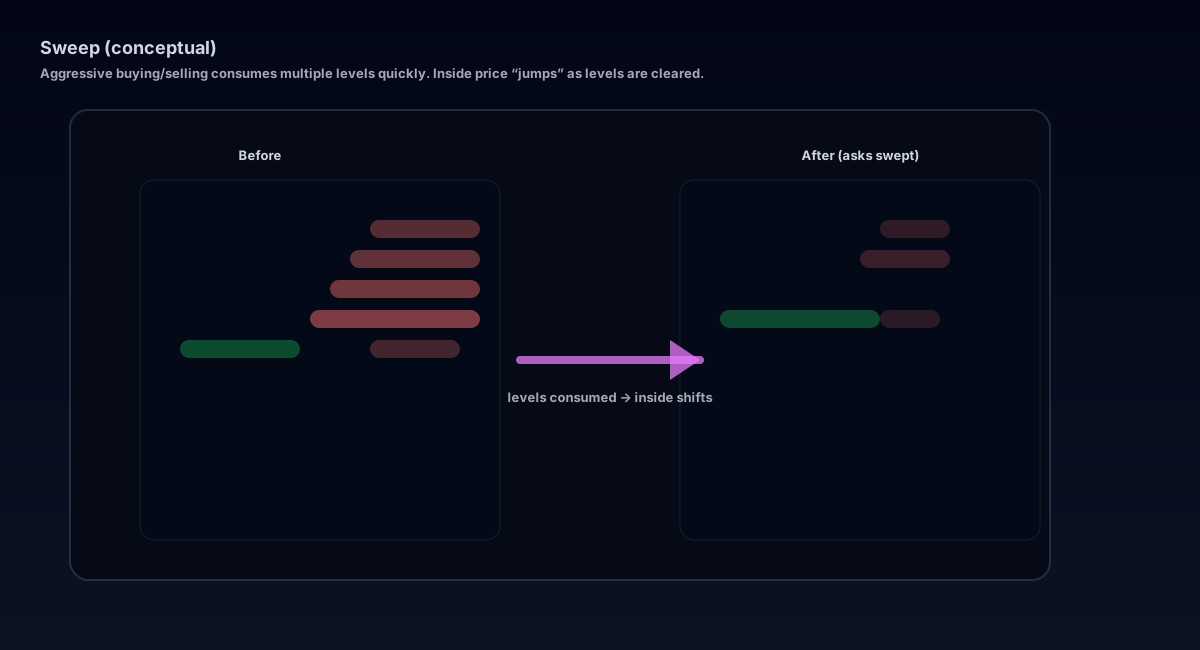
A sweep is when market orders consume multiple levels quickly.
What it looks like on DOM:
- Several levels vanish quickly in the direction of the move
- The inside price “jumps”
Interpretation:
- Sweeps through thin ladders can produce fast continuation.
- Sweeps into thick ladders often lead to absorption.
5) Absorption: the level that won’t move
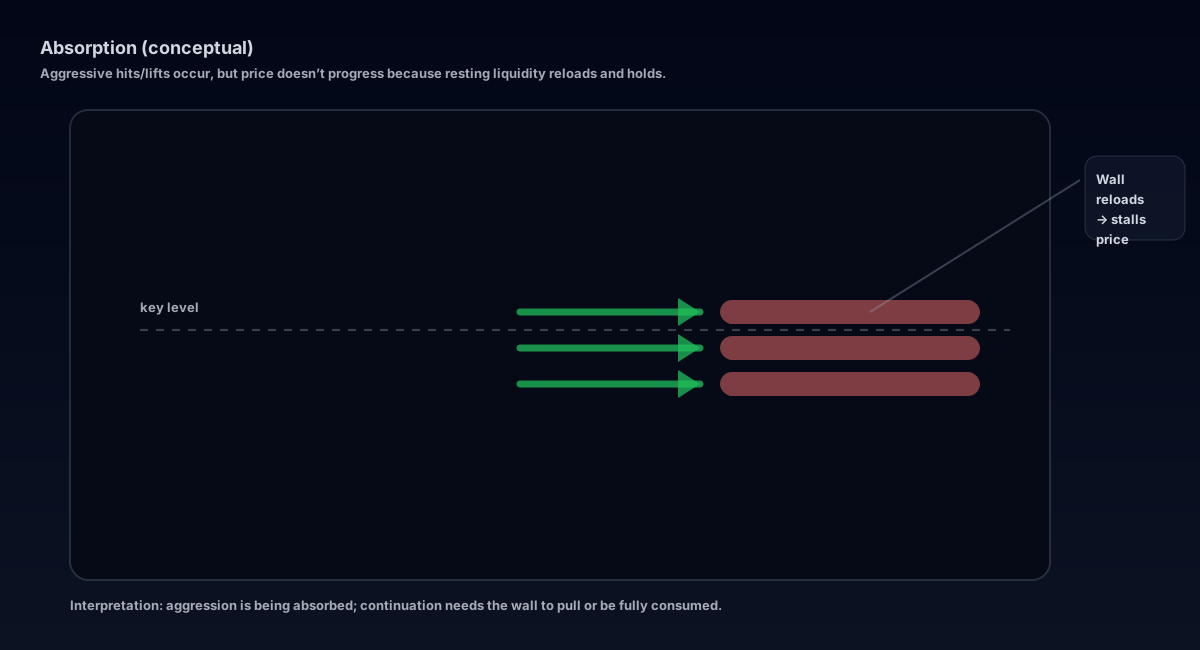
Absorption is when aggressive buyers/sellers are *spending effort* but price doesn’t progress.
DOM tells:
- Repeated hits/lifts at the same level
- That level refills (reloads)
- Inside price stalls
How to use it:
- If price can’t break up into asks and the asks keep refilling → sellers absorbing.
- If price can’t break down into bids and bids keep refilling → buyers absorbing.
6) Independent actors in DOM
The DOM can hint at actors, but it’s noisy. Look for:
- Levels that persist across time
- Levels that reload after being hit
- “Stepping” behavior where liquidity follows price (laddering)
Combine with heatmap:
- Heatmap gives the *structure*.
- DOM gives *timing/confirmation*.
7) Practical workflows
Workflow A: DOM timing with heatmap context
- Use heatmap to mark the next likely shelf (support/ceiling).
- Watch DOM as price approaches that shelf:
- Is liquidity holding or pulling?
- Is there absorption?
- Is a sweep developing?
- Take action only when DOM confirms the heatmap story.
Workflow B: Quick “pressure read”
- If bids keep stacking and asks thin → upward pressure.
- If asks keep stacking and bids thin → downward pressure.
8) Common traps
- DOM bait: a large number that disappears on approach.
- Overfitting micro-changes: the DOM updates constantly; you need persistence.
- Ignoring spread/conditions: thin markets produce misleading ladders.
9) Glossary
| Term | Meaning |
|---|---|
| Inside market | Best bid / best ask |
| Stack | Liquidity increases (adds) |
| Pull | Liquidity disappears |
| Sweep | Multiple levels consumed quickly |
| Absorption | Aggression fails to move price |
| Reload | Liquidity returns after being hit |